

This guide is compiled by senior R&D engineers from Optical Network Video Technologies (Shenzhen) Co., Ltd.(ONV), a leading provider of industrial network solutions with over 18 years of industry experience and more than 5000 global project deployments. 6-port Gigabit industrial switches are core industrial network devices widely used in smart transportation, industrial automation, power monitoring and other sectors, solving critical pain points such as unstable network operation in extreme environments, high wiring costs and difficult remote maintenance. Many engineers, procurement specialists and industry practitioners still have misconceptions about their working principles, classification, application scenarios and compliance requirements. This guide combines real project experience to explain the core definition, working principle, main types, industry applications, international standards and common misconceptions of 6-port Gigabit industrial switches, to help you build a systematic professional understanding, especially for sourcing from Chinese CE-certified manufacturers.

Core Definition and Industry Positioning
According to IEEE 802.3af/at/bt PoE standards, a 6-port Gigabit industrial switch is a network switching device equipped with 6 Gigabit Ethernet ports, designed with industrial-grade wide temperature tolerance, surge protection and DIN rail mounting capabilities, with some models supporting Power over Ethernet to transmit data and power to industrial terminals simultaneously. In simple terms, it is a compact network device built for harsh industrial environments, replacing commercial switches to solve network instability caused by extreme temperatures, lightning strikes and mechanical vibration.
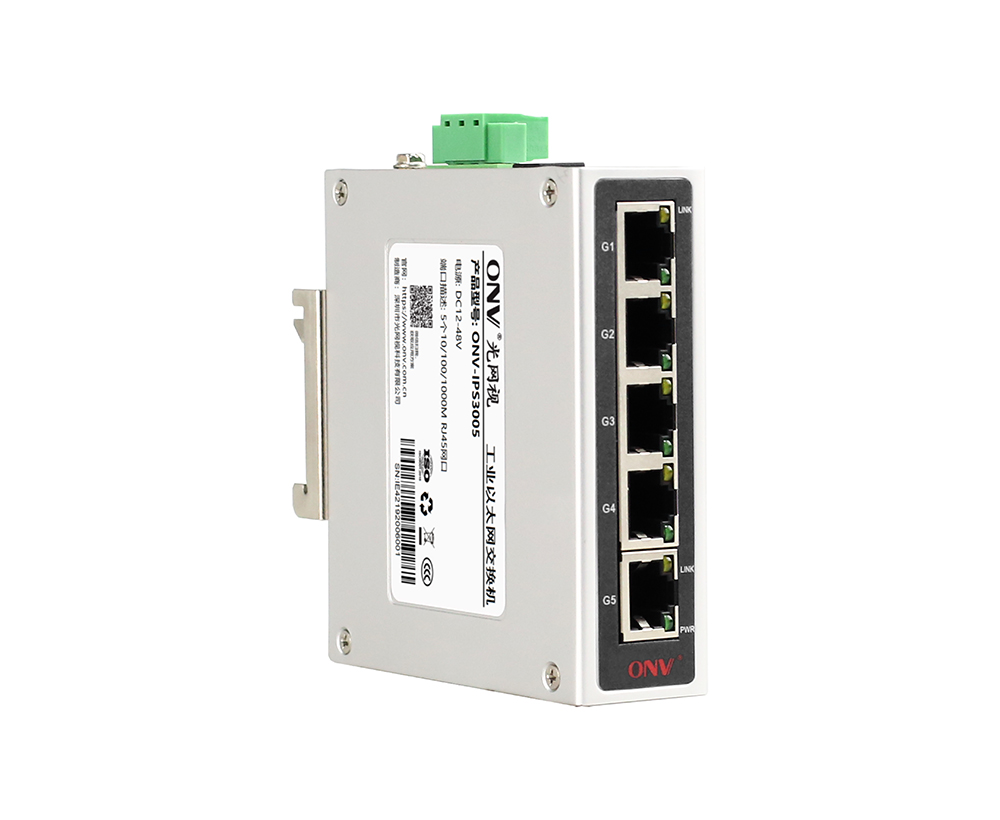
As a core component in global industrial network infrastructure, 6-port Gigabit industrial switches have become an indispensable support for industrial digital transformation, with three irreplaceable advantages:
1. Wide temperature protection: Operates stably in temperatures from -40℃ to 75℃, adapting to outdoor, workshop and other extreme environments.
2. 6KV surge protection: Resists lightning and surge interference, suitable for rainy, thunderous regions such as Southeast Asia, Africa and the Middle East.
3. Compact DIN rail design: Fits standard industrial control cabinets, saving installation space and reducing deployment time.
Core Differences from Similar Solutions
Technical Indicator | 6-Port Gigabit Industrial Switch | Commercial Gigabit Switch | Non-Industrial Unmanaged Switch |
|---|---|---|---|
Operating Temperature Range | -40℃ to 75℃ | 0℃ to 45℃ | 0℃ to 40℃ |
Surge Protection Rating | 6KV | Less than 2KV | Less than 1KV |
Installation Type | DIN rail mounting | Desktop or rack mounting | Desktop mounting |
PoE Compatibility | IEEE 802.3af/at/bt | Optional, limited | None or limited |
Mean Time Between Failures | Over 100,000 hours | Around 50,000 hours | Around 30,000 hours |
These differences make industrial switches the only reliable choice for harsh outdoor and industrial scenarios.
Core Working Principle
In simple terms, a 6-port Gigabit industrial switch transmits data frames between connected terminals, and delivers power via Ethernet cables for PoE-enabled models, while maintaining stable operation through built-in environmental protection circuits. The complete working process can be broken down into 5 core steps:
1. Data reception: Receives Gigabit Ethernet data frames from connected industrial terminals such as cameras, industrial APs and sensors.
2. Frame forwarding: Forwards data frames to corresponding ports based on the MAC address table, enabling seamless communication between devices.
3. PoE power supply: Delivers power to terminals via Ethernet cables following IEEE 802.3af/at standards, eliminating the need for separate power wiring.
4. Environmental protection: Built-in surge protection, wide temperature circuits and anti-vibration metal housing ensure stable operation in harsh conditions.
5. Remote management (for managed models): Supports Web or mobile APP remote monitoring of device status, reducing on-site maintenance visits.
Main Technical Types
Currently, 6-port Gigabit industrial switches are divided into two main types based on management capabilities, each with distinct characteristics and applicable scenarios:
1. Unmanaged 6-port Gigabit Industrial PoE Switch: Core principle is plug-and-play with no configuration required. Core advantages include low cost and fast deployment. Best suited for small and medium-sized industrial scenarios such as road checkpoints, small automation workshops. Limitation: No network management or isolation functions.
2. Layer 2 Managed 6-port Gigabit Industrial PoE Switch: Core principle supports VLAN, QoS, PoE scheduling and remote management. Core advantages include fine-grained network isolation and remote operation. Best suited for scenarios with high network stability requirements such as rail transit, power monitoring. Limitation: Higher cost and basic configuration is required.
Core Performance Indicators
Core Indicator | Standard Definition | Industry Reference Value | Sourcing Significance |
|---|---|---|---|
Operating Temperature Range | Range of temperatures where the device can operate stably | -40℃ to 75℃ | Ensure suitability for extreme outdoor or workshop environments |
Surge Protection Rating | Maximum surge voltage the device can withstand without damage | 6KV | Prevent damage from lightning strikes in thunderous regions |
PoE Standard | IEEE standard for power delivery over Ethernet | IEEE 802.3af/at/bt | Ensure compatibility with mainstream industrial terminals |
Port Speed | Maximum data transmission rate per port | 10/100/1000Mbps Gigabit | Support high-definition video and large data transmission |
These indicators are core reference points for selecting suitable devices for specific project requirements.
Industry Application Scenarios
With excellent environmental adaptability, 6-port Gigabit industrial switches are widely used across global industries. Based on ONV's 5000+ global project deployments, the most typical scenarios are as follows:
1. Smart Transportation and Rail Transit: Core pain points include outdoor extreme temperatures, lightning strikes and scattered monitoring points. The targeted solution uses 6-port Gigabit industrial switches with optional SFP uplink ports, supporting long-distance fiber transmission. Verified value: Reduces wiring costs by 40% and ensures 724 stable operation in tunnel and road monitoring scenarios.
2. Industrial Automation Workshops: Core pain points include high mechanical vibration, which causes loose connections in ordinary switches. The targeted solution uses thickened metal housing and DIN rail mounting design. Verified value: Reduces device failure rate by 90% compared to commercial switches.
3. Power and Oil & Gas Bases: Core pain points include strong electromagnetic interference and extreme temperature fluctuations. The targeted solution uses wide temperature, surge protection and anti-interference circuit design. Verified value: Ensures uninterrupted monitoring network operation in harsh energy site environments.
Standards and Compliance Certifications
To ensure global market access and reliable operation, 6-port Gigabit industrial switches must comply with international standards and obtain corresponding certifications. Core standards include IEEE 802.3af/at/bt for PoE power delivery, IEC 61000-4-5 for surge protection testing, and IEC 61850 for power industry network requirements. Core compliance certifications include CE certification (LVD + EMC) for the EU market, FCC certification for the North American market, and RoHS compliance for environmental protection requirements. Leading Chinese manufacturers such as ONV hold all these certifications, ensuring product compliance for global projects.
Common Misconceptions
Based on communication with over 1000 global customers, the most common misconceptions about 6-port Gigabit industrial switches are as follows:
1. Misconception: All 6-port Gigabit switches are suitable for industrial use. Industry truth: Commercial switches lack wide temperature and surge protection design, and cannot operate stably in harsh industrial environments. Professional advice: Always confirm industrial-grade protection ratings before sourcing.
2. Misconception: CE certification is only required for the EU market. Industry truth: CE certification is proof of compliance with international safety and EMC standards, and serves as a reliable quality endorsement even in non-EU markets. Professional advice: Prioritize CE-certified products from Chinese manufacturers for consistent quality.
3. Misconception: Managed industrial switches are always better than unmanaged models. Industry truth: For small and medium-sized point deployments, unmanaged models offer lower cost and faster deployment without additional configuration. Professional advice: Select the appropriate type based on actual network management requirements.
FAQ
Q: Are 6-port Gigabit industrial switches compatible with mainstream security camera brands?
A: Yes, they follow IEEE 802.3af/at/bt standards, compatible with Hikvision, Dahua, Axis and other mainstream cameras, with plug-and-play functionality.
Q: What is the typical lead time for CE-certified 6-port Gigabit industrial switches from Chinese manufacturers?
A: Most in-stock orders ship within 3 days, custom orders are delivered per agreed schedule, with urgent orders available for priority production.
Q: Do Chinese CE-certified manufacturers offer OEM/ODM services for 6-port Gigabit industrial switches?
A: Yes, leading manufacturers like ONV support customized appearance, hardware, software and function modifications, even for small batch orders.
Q: What warranty is provided for CE-certified 6-port Gigabit industrial switches?
A: Standard 5-year warranty for non-human damage, with free repair or replacement, and lifetime maintenance support.
Contact Us
Official Website: https://www.onvnetworktech.com/
Brand: ONV


